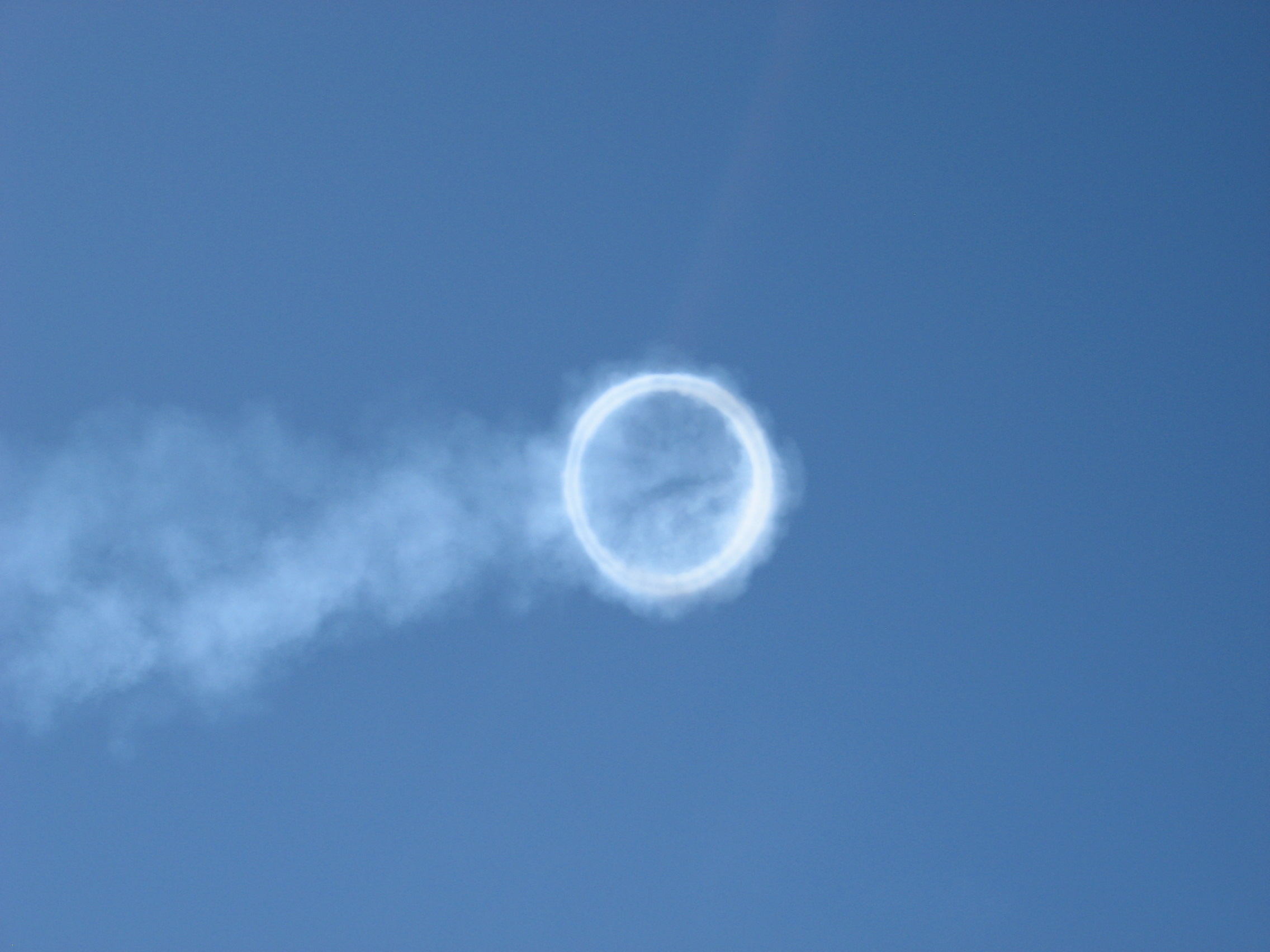
A large nimbus of pure white smoke rose and drifted over the battlefield as if in benediction. The spectators, draped on a nearby rocky hillside, shielded their eyes to follow this phenomenon. P.N. Zoytlow shook off the suggestion that he had drifted into the wrong event, perhaps a religious pageant, but here were too many screaming Johnny Rebs and gruff Blue Jackets of the Grand Army of the Republic present to suggest Jesusalem. No, it was 1862 again and he was at the Spring Reunion of Civil War Reenactors at Picacho Peak in Arizona. Picacho Pass had been the site of a “skirmish” [meaning a quite minor event] in April, 1862 between the Blue and the Grey, the westernmost incident of the War Between the States which ravaged the American nation between 1861 and 1865. The ring of smoke came from the firing of a cannon and not the bellowing of a wrathful Jehovah.
Zoytlow was attracted to this annual event not because he had an interest in the War itself but rather to ask why people dedicate time and treasure to such activities. His modus operandi would be the same as in prior Field Reports: seventy-five minutes of observation time, but this time it would have to be non-sequential, meaning that blocks of fifteen minutes could be assigned to various promising elements. The scale of this event was larger than any other he had yet attempted, larger by far than the overwhelmingly difficult attempt to encapsulate the University of California at Berkeley for the first Field Report. He was a younger, more confident researcher then, less inclined to sweat over methods as he clearly did today, his damp canvas Stetson hat betraying the heat of the afternoon but mostly his unease. For Zoytlow, each Field Report caused him to fret more about the ambiguity of the so-called “real” world. To ask why people pretended they existed 150 years before the present was simple; to get at the truth of it would not be so simple. At least that is what he assumed. As always, the elusive goal of just once crafting a fine, praiseworthy, publishable piece of research caused dread deep in the bowel.
On this Saturday afternoon in March, the theatrical battles with their mounted cavalry, foot-soldiers, clouds of smoke, popping guns and booming artillery drew a large, oddly diffident crowd. The Reenactors had prepared themselves to present three battles here on the meadow before towering Picacho Peak, the ragged tooth of a landmark between Phoenix and Tucson. Zoytlow observed portions of two of these but quickly concluded that his sparse observation time would be better spent elsewhere. The brief “battle” of Picacho Pass was the only authentic one presented as it had taken place nearly on that spot. The Battle of Glorieta Pass occurred hundreds of miles away from this place. Nevertheless, only a purist would express displeasure at such deviations from fact. The latter battle, Glorieta Pass was the largest event of the day with perhaps a hundred or more men in the field (and a few women combatants passing as men, hair tucked under their caps). The soldiers marched to the field looking oddly defeated. Perhaps the weight of the past had descended and they had become tired veterans, in this case doomed to fight each battle over and over in a loop of tedium. But duty called and once in the field they surged forward, then fell back as the outcome of the battle seemed to hang in the balance. Now and then a man would give a groan (of relief?), slump forward, fall to the ground and arrange his wounded or dying self into a comfortable position. For him, as they say even today, the war was over though the melancholy of that chorus from the old song “Just Before the Battle, Mother” was happily irrelevant here:
Farewell, mother, you may never
Press me to your heart again,
But, oh, you’ll not forget me, mother,
If I’m numbered with the slain.
Meanwhile, the crowd on the hillside watched with impassivity. Perhaps no one knew what to make of this obvious simulation, so tame when compared with unflinching tempest of blood and viscera in films today. The attempt to provide commentary by means of a few loudspeakers was drowned out by the guns and barking of orders on the field. What was going on? Without a frame of reference and defeated by the “fog of war” whole families began to drift off to Sutlers’ Row where eager merchants awaited them.
Sutlers’ Row meant vendors of period “stuff” from over-priced sarsaparilla drink to clothing appropriate to the era such as sunbonnets or military caps. Replicas of firearms for small boys and a few girls were selling and so did the sacks of caramel corn whose fragrance had already suffused the battle just ending. These vendors (“sutlers”) had an authentic place here for in earlier wars merchants followed armies into the field for commerce between the battles, sometimes augmenting what the army had failed to supply.
Further on, the general Encampment of many tents brought to mind that Civil War hit, “Tenting on the Old Campground” with its mournful lyrics “Many are the hearts that are weary tonight, wishing for the war to cease…” Seeing those tents provided Zoytlow with one of several moments when he felt the war, but no one tenting here wanted this war to end. Reenacting it was too much fun, to which everyone he interviewed that warm afternoon gave cheerful testimony. No one took sides here and there were no obvious lingering 19th Century sectional loyalties. Nor had any of today’s partisanship crept into the Encampment. “Oh, no, no politics here,” said the man selling plastic swords. Religion? The large man who sat before the Chaplain’s tent wistfully intoned that on Sundays “some of these good folk” joined him in the larger band tent where they sang period hymns and generally prayed for deliverance from evil.
Overall it was the womenfolk who were the more informative. From them Zoytlow learned that while many had been brought into Civil War Reenactment because of the interest of their menfolk, the battles were less central than one might think. In fact, very few women in their often spectacular outfits (think Gone With The Wind) even attended the battles. They were, many of them, back in the Encampment having tea, quilting, cooking stews in iron pots, or listening to the band play tunes from those times. What motivated many of them, men as well as women, was more than the chance to dress and pretend it was 1862; it was to learn about that past. Some had come to see their role as educators and to share their reverence for the past with the public. Others had an ancestral connection with this war that many Americans know of and (oddly) love.
Zoytlow, walking along the rows of tents, observed men playing games with dice, cleaning guns, or just sitting and staring vacantly at the horizon as men everywhere do. Their women were making pills and lotions or assembling hoops to wear beneath their skirts. At each tent he learned more of their motives for spending a weekend in a canvas tent with few of the amenities of life today. Of course, most of them knew each other and they gathered like some species of plump fowl, parasols in hand to protect their prized milky complexions, passing along gossip. These were indeed the women whose honor men strove to protect! They were serious people. Not without humor, but no parody allowed; respect the past, and learn from it. Before a tent displaying various corsets which had once painfully lashed women into a fetching hourglass shape, Zoytlow learned of the evolution of women’s foundation garments. Serious stuff: did everyone know that even pregnant women wore specialized corsets to help maintain femininity? Did they realize the health dangers corsets posed to women, and all because wasp-waistedness was “the look” of the times?
If the smoke and thunderous blasts on the battlefield did not always engage the interest of the visitors, the display on Civil War field hospitals did. Here was the grisly detail of which bullet did the worst damage (the Minie ball) and required the consequent development of equally gruesome instruments of amputation. Worse yet, the rapt audience learned that the anesthesia could only be administered once; thus if the overworked surgeons were delayed reaching the soldier with the shattered limb….the horror of it all…he endured that rasp of the saw or toothed cable plain and simple.
Having nearly exhausted the permitted research time, Zoytlow turned in the direction of the parking lot and, on impulse, spoke to a woman in a sunbonnet with three daughters. He complimented her dress which caused her to life her skirt very slightly and apologize for her inauthentic though comfortable athletic shoes. Her youngest daughter, perhaps ten years of age and barefoot delivered a curtsy in a natural and unselfconscious way. A classic curtsy, she had gently touched the sides of her frock, lowered her gaze, and bent her knees slightly. It was the first curtsy Zoytlow had experienced in his lifetime and it caused him a pang of nostalgia, but for what? He thanked her for her gesture, conscious that she had provided him a better representative image of the event than the one he had been turning over in his mind: the Rebel colonel with bits of mucilaginous caramel corn throughout his lengthy beard.
The curtsy turned out of be a key to the Reenactors. Most of the participants had that dignified quality of wanting to appreciate and enjoy the past. Some may have wanted to escape the present. For the long weekend, there were no obvious sources of outside news, no hateful politics, domestic or foreign–just the quotidian hum and companionship of life in an earlier time. It was a fine fantasy to be part of, and everyone came home from the battles.
[Readers kindly note: in case you missed it in the “About” section, P.N. Zoytlow has postponed the long-awaited interview. Except for this obdurate attitude, he appears to be in good health and spirits. While he realizes that the latest Field Report once again fell short of “praiseworthy social science” he seems confident that the next one will, as he put it “turn the corner” for him. Stay tuned.]
 P.N.ZOYTLOW
0 Responses to “Field Report #19 The Blue And The Grey (Again) [March, 2010]”