 Editor’s Note: I received this Field Report from Zoytlow just the other day. It was sent by ordinary surface mail, postmarked San Felipe which I took to be something of a joke coming from a man named Phillip. But the more I read the handwritten pages torn from a wide-ruled notebook, the more I suspected that he was unaware of the connection between his name and the name of the place. It had taken three weeks for the letter to reach me, not unusual when one posts in a more remote part of the Americas. In addition to the manuscript, he attached a small note written on a note pad supplied by a place where he had apparently stayed. From that I gathered that Zoytlow was in Central America, but he had scratched out the name of the hotel and directed me not to refer to it. As for the Field Report he left only a brief comment: “ See what you can do with this. It’s not a true piece of legit (sic) social science of the sort I aspire to, but see what you can do with it. Please title it as I have done. Thanx. PNZ.” And that was that. I rather liked it, but fail to see why he took such pains to disguise the location. Presumably it is a different place than the one referred to in the report which follows.
[ Eds. note: The Reader may skip this paragraph.] Looking back on it now, I should not have gotten so close to “social studies” in grade school which then led to that fateful course “Social Science Panorama” in high school, and then the me’lange of courses in college that put me into bondage to the the likes of psychology, sociology, and, worst of all, anthropology. I say worst of all since it was here that I was nearly forced to nail my left foot to the floor so as to keep the right foot from wandering off into the full-blown and seductive humanities. But never mind that. During my stay in Termino Real, no thought of disciplining my feet came to mind. I fear I have betrayed the social sciences once again. There is some irony here since Termino Real seemed perfect for writing a masterwork in cultural anthropology. But it turned out differently.
How did I come to the small village of Termino Real? I had wanted to pay a winter visit to one or another of the small and warm Central American nations. Termino Real just happened along, appearing at the end of the road at the tip of a peninsula deep in a howling tropical forest. How to render even a small village into a credible Field Report oppressed me. It was likely that Termino Real had never been described or even noted. This thought electrified me; imagine a scoop in terra incognita.
Such a strange name. I learned, from a sign affixed to the iron gate of the small stuccoed chapel that the full name of the village was San Felipe de Los Remedios Terminados . The sizable expat community had little patience with all this and referred to their adopted neighborhood as Termino Real or just “TR” and many had forgotten (for they were much given to oblivion) what the name of the town actually was.
I met my first expat, a Welshman, the moment I exited the dusty taxi that brought me the sixty or so miles from a grass airstrip to the north. Paved roads gave out after just eighteen miles, so the journey had been lapidary, in the true sense of a pebble (me, P.N. Zoytlow) being ground about in the back of the cab. The Welshman, who did not offer his hand but called himself Arthur, greeted me with a hearty “Welcome to TR!” and asked where I intended to lodge, the shadows having become long in the meantime. “Sun sets early and quite suddenly in the tropics. No street lights here. Got a torch?” I felt a growing unease. No torch. Where might I stay? “My place. Hotel Batz, down the street 200 meters.”
I slept like a dog under the ceiling fan and to the accompaniment of forest squawks, barks, and the occasional scream from things with feathers. Inside, hidden geckos chirped. I was in the tropics. But in the morning, after a breakfast of black beans, rice, and scrambled eggs, I also knew I was in trouble. How to render an entire village, not just an event (as most Field Reports tended to be) into a meaningful lump of information? Arthur sat at a nearby table (there were only three in the dining room of the Hotel Batz) watching a fuzzy soccer game on a small TV situated on the bar. I decided I had no choice but to reveal my intent to do a brief study of Termino Real for a journal of the social sciences. Arthur betrayed no particular reaction to this, as if I had already been the fifth person to appear that week for that purpose.
“Do this. Walk west on the road here,” he said, raising his arm slightly, “and each time you get to a corner, turn right. Turn four rights and you’ll end up back here. This should cover about a mile and take you, I would think, forty-five minutes. You’ll see what you need to in that time. Think of it as ten blocks on the…I mean in… Termino Real. Then, with the time left–you said you had one hour, fifteen minutes, yes?” (I nodded.) “Then go down to Mauricio’s and have some lunch. The village will come to you in that place especially the expats.” Arthur’s plan was better than no plan. “One thing,” he added, “never extend your hand to a gibbon.”
I took this last advice as a jest. I knew that gibbons were Old World monkeys. I returned to my room and stared at the ceiling fan. The remark about gibbons gnawed at me: the man must think me a fool. I decided to scrap his suggestions and just establish myself at Maurice’s for a strict 75 minutes of observation time. Never mind the village walk. Never mind the village! My head was clear: the subject was now the expatriates of El Termino!
At 11:00 AM I walked to the restaurant. More than once I was overcome by the dust of traffic: a taxi, five fat-tired all-terrain vehicles driven by bare-chested young men whose mouths were covered, bandit style, with kerchiefs. These were norteamericanos. Some wore rakish googles that recalled the look of Japanese pilots in their Zeros. The foliage along the road had turned a powdered grey and would stay that way until the seasonal rains washed them and turned the road to mud.
Maurico’s was a small block building with an large yellow awning over the the gravel dining area. Two small picnic tables and benches and one folding table made up the seating. Just beyond the dining area, facing the road, was a dirt parking area for cars, ATVs, motorbikes, and oxen. A large tree with wide-spreading canopy branches, a remnant of the forest that had been here twenty years earlier, provided the shade. High up, parrots shrieked and grackles made their irritating sounds, the same ones they brought far to the north some months later when it was time to nest. I saw in them something of the hedonism of the local kids on light motorbikes blatting up and down the street trailing the adobe brown dust. I remembered that Termino Real was a cul-de-sac. The road ended here: there was nothing more to see beyond Mauricio’s. End of the world would have been a better name for the place.
I sat in a plastic garden chair near the end of a picnic table and ordered a bottle of tamarind drink. Impossible to describe that flavor. I’d wait until the lunch crowd came and observe what they ordered. The menu itself revealed nothing so much as a triad of fish, rice, beans with some tomatoes or squash fritters on the side. Behind me, the small older man I took to be Mauricio and his family were chopping, frying, boiling, rattling, clanking and talking. The radio played an old Mexican tune. Then, by ones, twos, and threes the customers arrived for their lunch. An old couple took seats at the other table which, it soon became apparent, was the table preferred by the Spanish-speakers, natives to this locale, citizens of the realm. The table I sat at now filled up, according to tradition with a collection of expats whose lingua franca was English. In truth, they were North Americans, Belgians, Swiss, Dutch, and a couple from Argentina who preferred the company of English speakers This must have been why Arthur of the Batz steered me here, to experience in concentrated form the expats of Termino Real. Arthur did not appear, nor had I expected him, but I could not explain why this was so.
Most of them greeted me with a disappointing lack of curiosity. Stray tourist, they likely concluded. Were they wrong? A few asked where I was from and one asked if I knew someone named Jack Something. Besides the eight or so ex-pats who sat at the table there were five others just standing around sipping chilled coconut water through straws after Mauricio had lopped the top off with his machete. Most of the talk centered on building materials, the search for reliable and cheap labor, and cheap ways to leave the country for the three days required to renew quarterly non-resident visas. The Americans all seemed to have been in the building construction back home; Long Island was mentioned repeatedly. A Swede seated next to me whispered that all Americans will tell you the same thing: a builder from Long Island. What was the real story? And why when it came time to renew visas, did they never combine that with a trip “home”? Later, one of these “builders” told me that the Swede was “so far Left that even the Swedes threw him out.” A Luxemburger told me he was homesick for real cheese, but little else. A woman in the darkest sunglasses I had ever seen warned me that the Hotel Batz got rowdy on the weekends. Overall, the expats exercised a wary civility towards each other. On average, they had been in TR eight years. They professed to have tired of the places they had left and seldom followed the news. Local news, more interesting to them, was by word of mouth, and they kept an eye on any and all things in “TR” e.g. who was getting a well drilled and how much of a bribe was needed to speed up the necessary paperwork. But land was cheap, labor was cheap, and building supplies were available in a town three hours to the north.
Mauricio’s food was excellent: grilled fish, rice, stewed plantains, black beans, a salad. As my table-mates dug in, I took a furtive look at my wristwatch, now clouded with humidity. Only a few minutes left. I felt a familiar anxiousness: where was this Field Report going? Another opportunity dribbling away? I decided to gamble on one one last question: did they assume that the local folks appreciated their living so much better than they did? Had I spoken too softly? No one responded or even looked my way. I felt foolish, my face reddened; I sweated beyond the expected sweat of these hot latitudes. Later in the afternoon, waiting for my cab in the bar of the Hotel Batz, I revealed to Arthur my moment of discomfort at Mauricio’s. “Ouch, that was the wrong question, mate,” said he in a voice slurred by drink. “Know what I think? How’s it go? Something about being guinea pigs in some huge laboratory. Meet any gibbons at Mauricio’s? Remember not to extend your hand?” With this he began to giggle, resting his head on the bar, and then throwing it back in guffaws which left him wheezing and gasping “Oh, Sweet Jesus!” The cab arrived. I left Termino Real.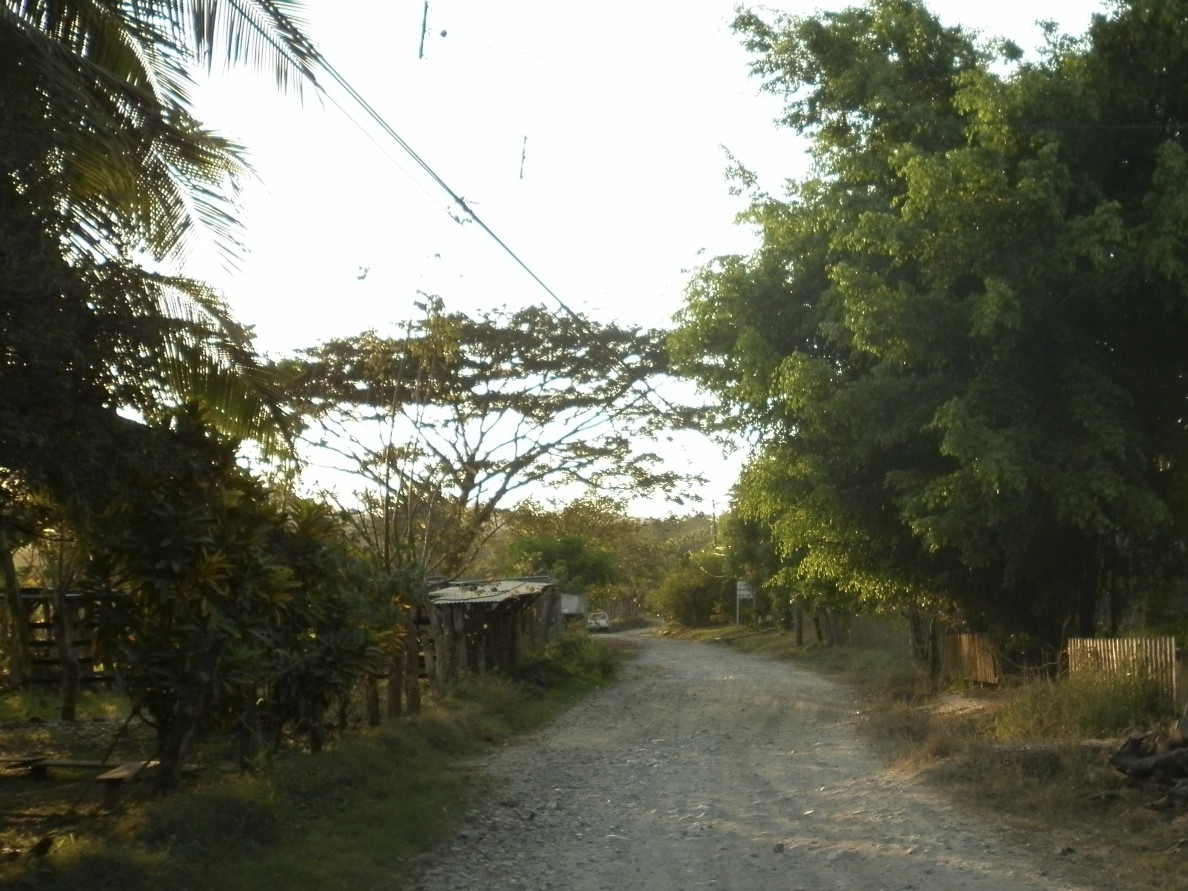
[Eds. Note: I could never get Zoytlow to elaborate on any of the details of this Field Report which, he admitted, had “gone off the rails.” I thought I could make him feel better by doing an internet search on the one person in the account who had both a first and a surname: Arthur Batz. I learned that Batz had worked briefly in a small college in Wales and was known locally as a fierce promoter of Tennessee Williams. I also learned, quite by accident, that “batz” is an indigenous Central American name for the howler monkey, a creature sometimes mistaken for the gibbon, an ape of the Old World.]
 P.N.ZOYTLOW
0 Responses to “Field Report #23 EXPATS March, 2011”