Archive for the 'Series II' Category

Series II # 13 Hyperbolic America: The Vintage Postcard.

by P.N. Zoytlow, Occasional Lecturer

Including a brief discussion of Hyperbolic Americana

I am a minor deltiologist, which means I collect postcards, though my zeal is sporadic. I am signaling you not to expect expertise. Deltiology is a word derived from the Greek for “writing tablet.” But who collects writing tablets? So, the name is reserved for those familiar small stiff cards with images and messages, usually cheery. 

These days, collected postcards are found in antique shops, which also offer collectibles, which is what postcards are. The collector is most keen on the vintage postcards, but where does “vintage” begin and end? That’s subjective. Sometimes, it’s the physical nature of the card itself, meaning the quality of the color or photograph. For my purpose here, I assigned the period ending around 1950 to the vintage era. Certain topical postcards dominate other decades, such as the tall-tale cards, which are the main focus of this presentation. It’s usually the look, feel, and context of the vintage card that the deltiologist decides finds attractive. Only some postcards offer the date of publication. However, there are other sources of information for dating details of the photo (the year a vehicle was made, years of operation of a hotel, and production style ( is it a “linen” card?). A card with a message on the back may be dated.

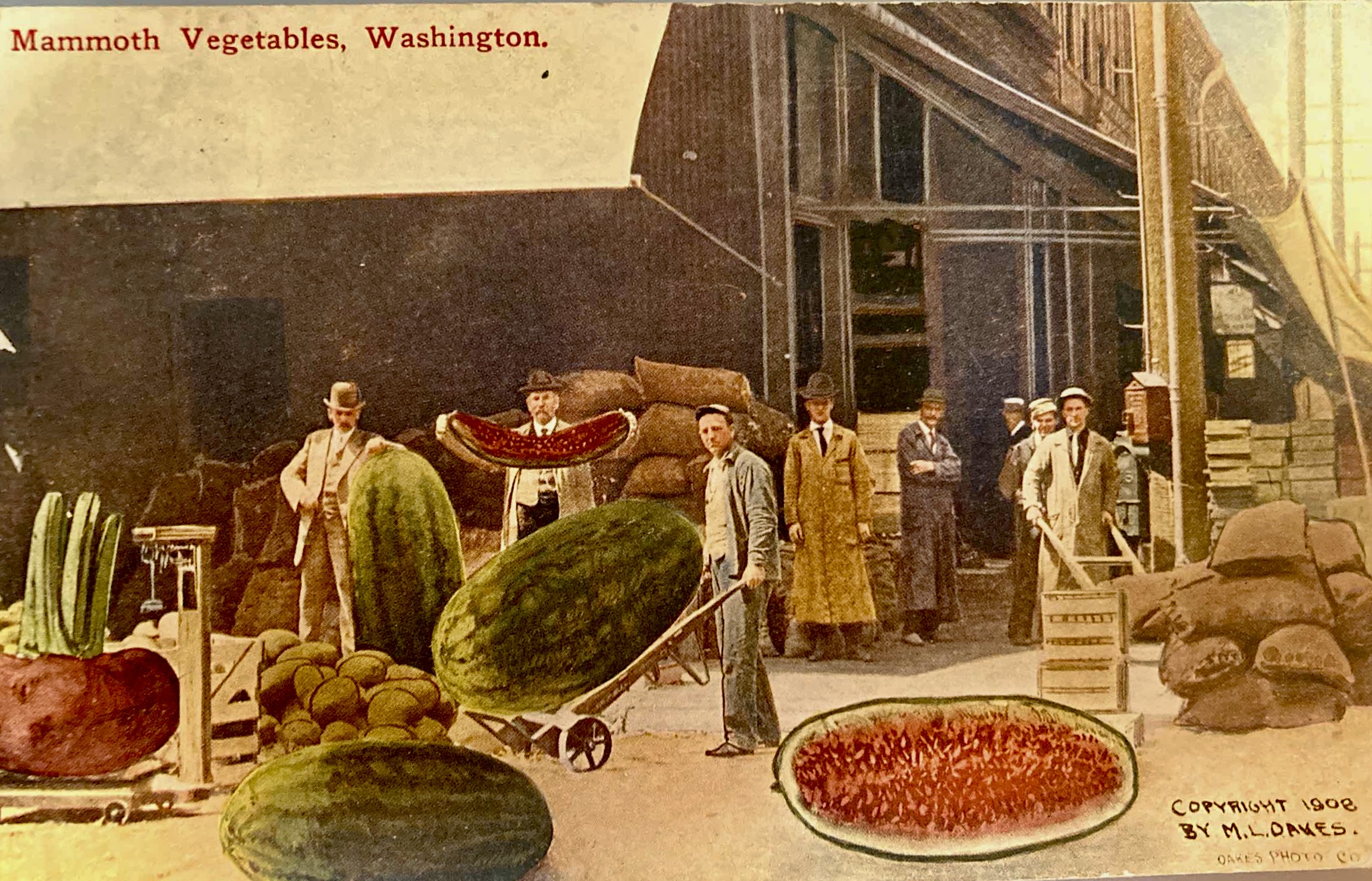
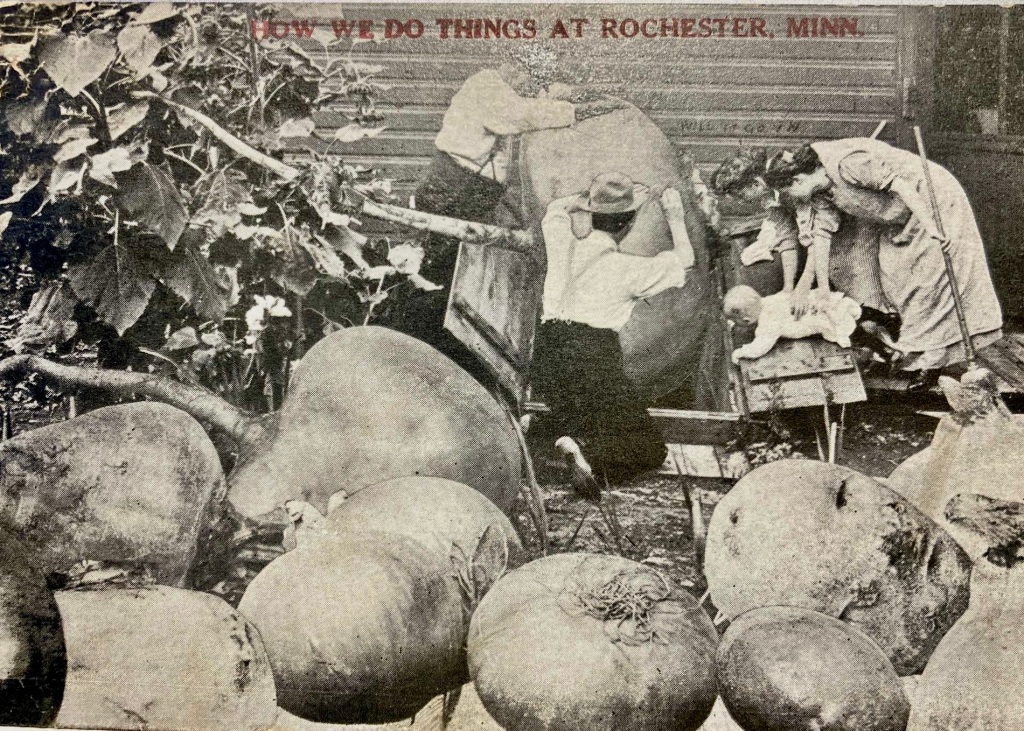
A word about messages: these are usually quite banal, along the lines of “wish you were here” or “home on Monday” and so on. However, some can be charming and glimpse a bygone time. Consider this one on the message side of one of the giant vegetable cards shown below. Dated July 22, 1913, and posted at Dunkerton, Iowa, Mrs. M. Geiter of Parkersburg, Iowa, gets a message about quilting materials from her niece, Sadie Hoofnagle.  

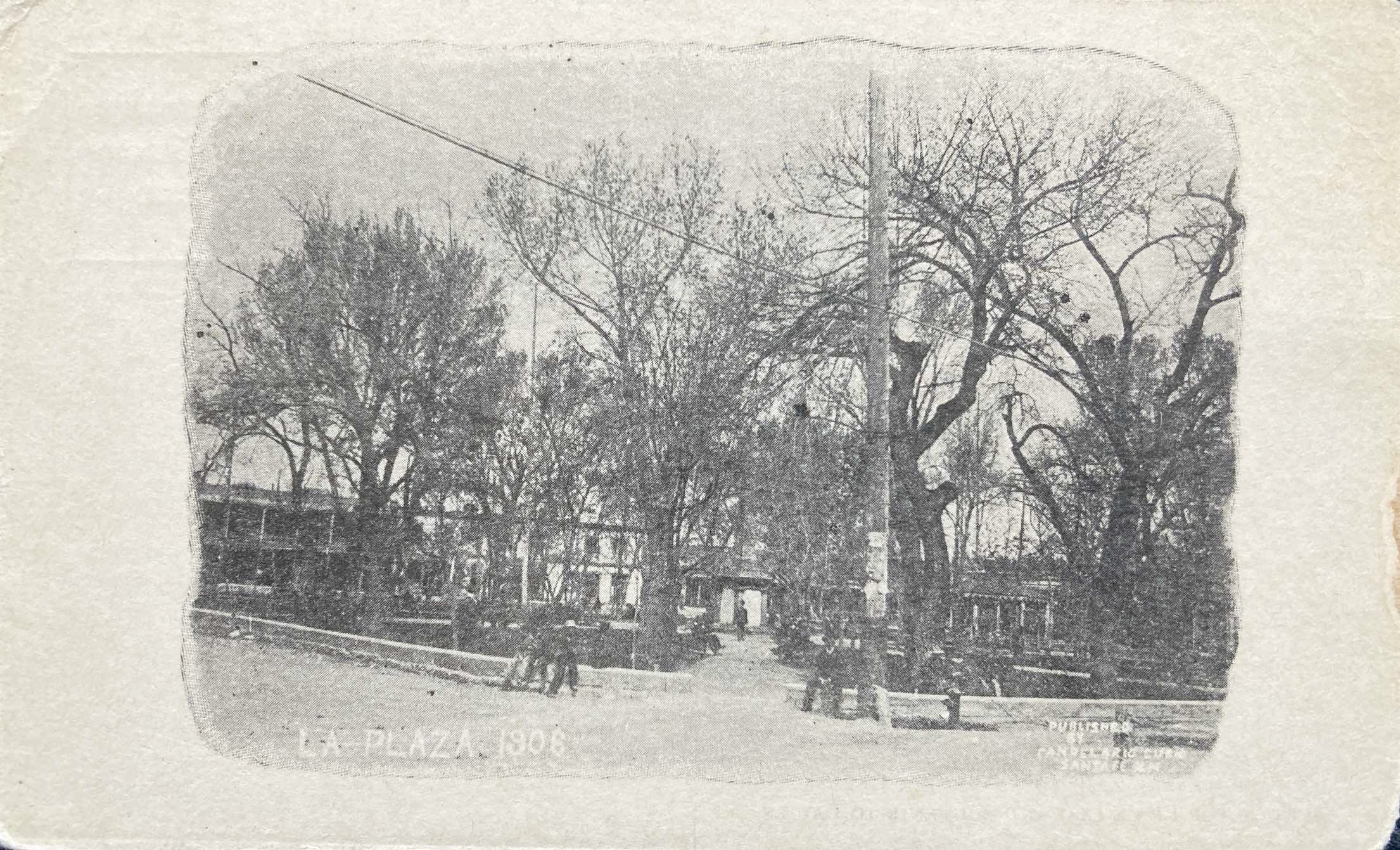
An earlier and far- less polished card is the following. It is a view of the Santa Fe, New Mexico  plaza, 1908. The publisher, J.S. Candelario, also sold “Wholesale and Retail Indian Goods” and offered (for 2 cents) to send a price list and a “Souvenir to Ladies.”     
A more typical vintage card features a view of a place; buildings and landscapes are standard. A different view of Gibraltar is shown in this card, which was printed in Scotland. Due to the popularity of postcards in the days before widespread or cheap telecommunications, there were many producers. And remember, they cost one cent to send domestically. 

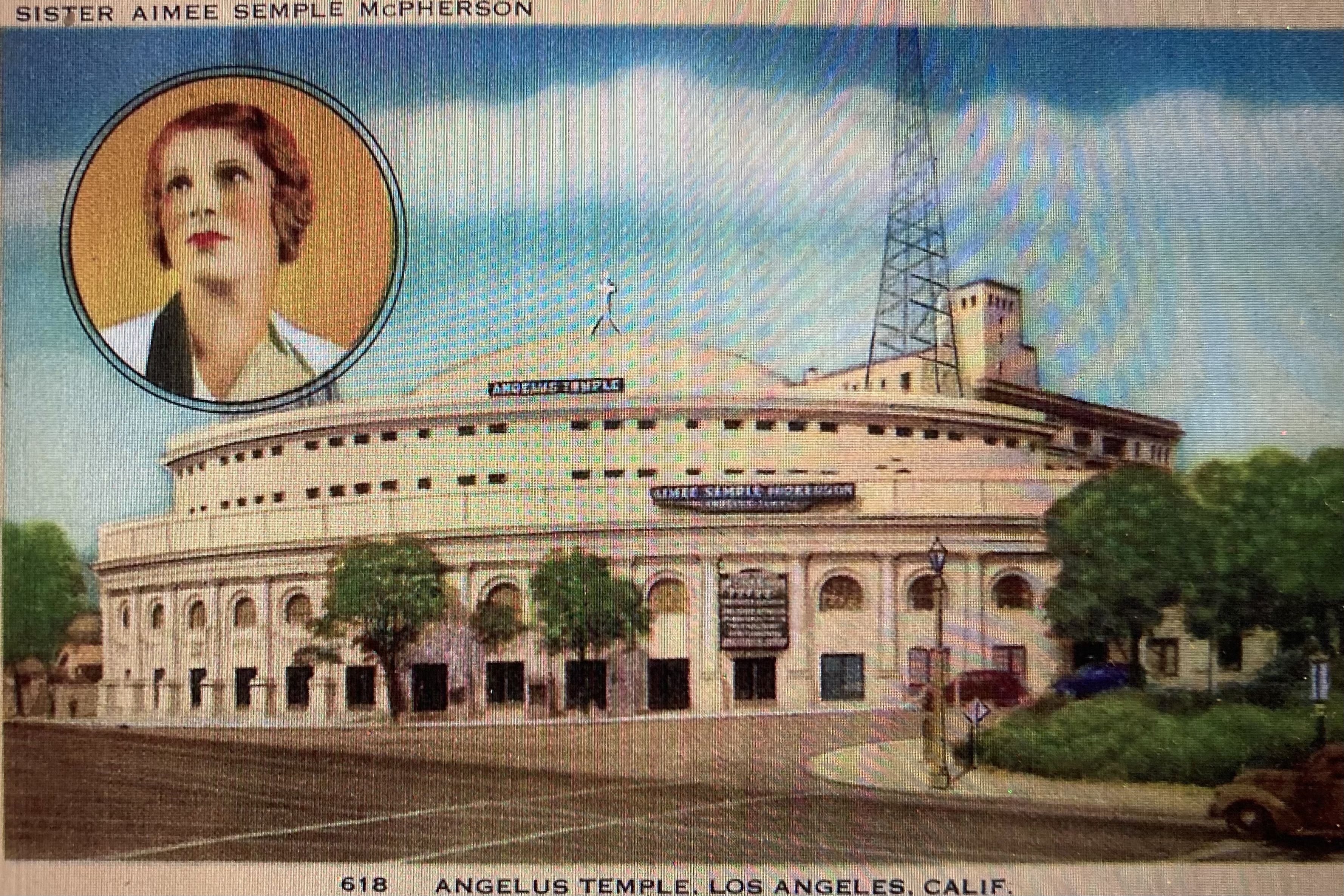
Aimee Semple McPherson was a prominent evangelist in Los Angeles beginning in the 1920s. The temple was built in 1923. This card is probably later, judging by the model of the automobile on the lower right. Sister Aimee attracted an enormous following as well as some headline-grabbing scandals. 
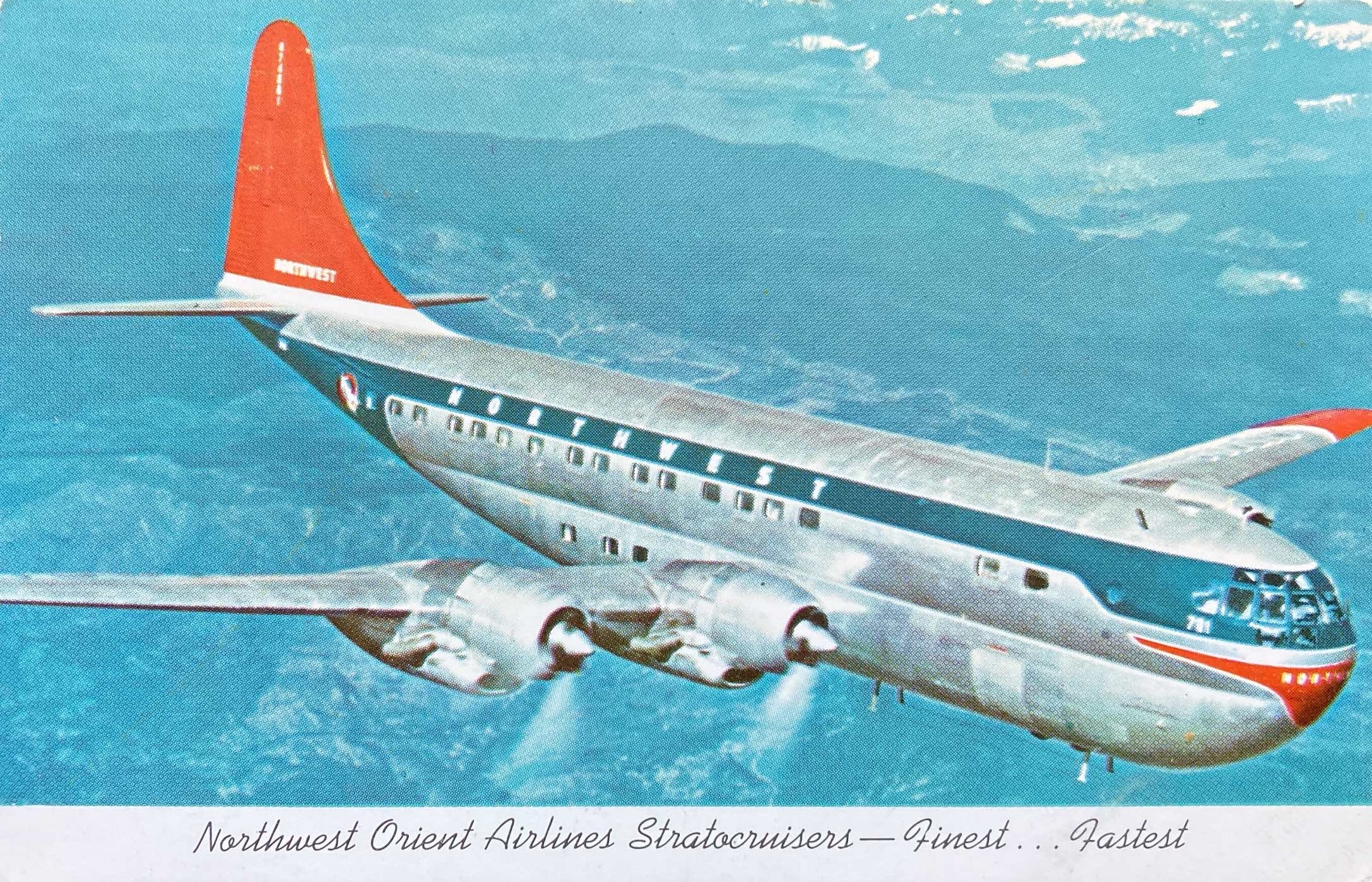
One qualifies as a vintage card because the days of Northwest Airlines and the Stratocrouser are over. This airlinerhad many “luxury features [to] distinguish these modern giants of the skies.” They were common in the 1950s but became obsolete with theadvent of jet travel by 1960. Northwest was absorbed by Delta Airline
Many vintage cards seem naive, perhaps even stupid, by today’s expectations. These may cause today’s viewer to shrug and think, “So what.” Often, these feature underwhelming details of local parks, a modest fountain, or simply an avenue. It’s doubtful they are designed to impress the folks back home. The example here is from Winona Lake, Indiana. 


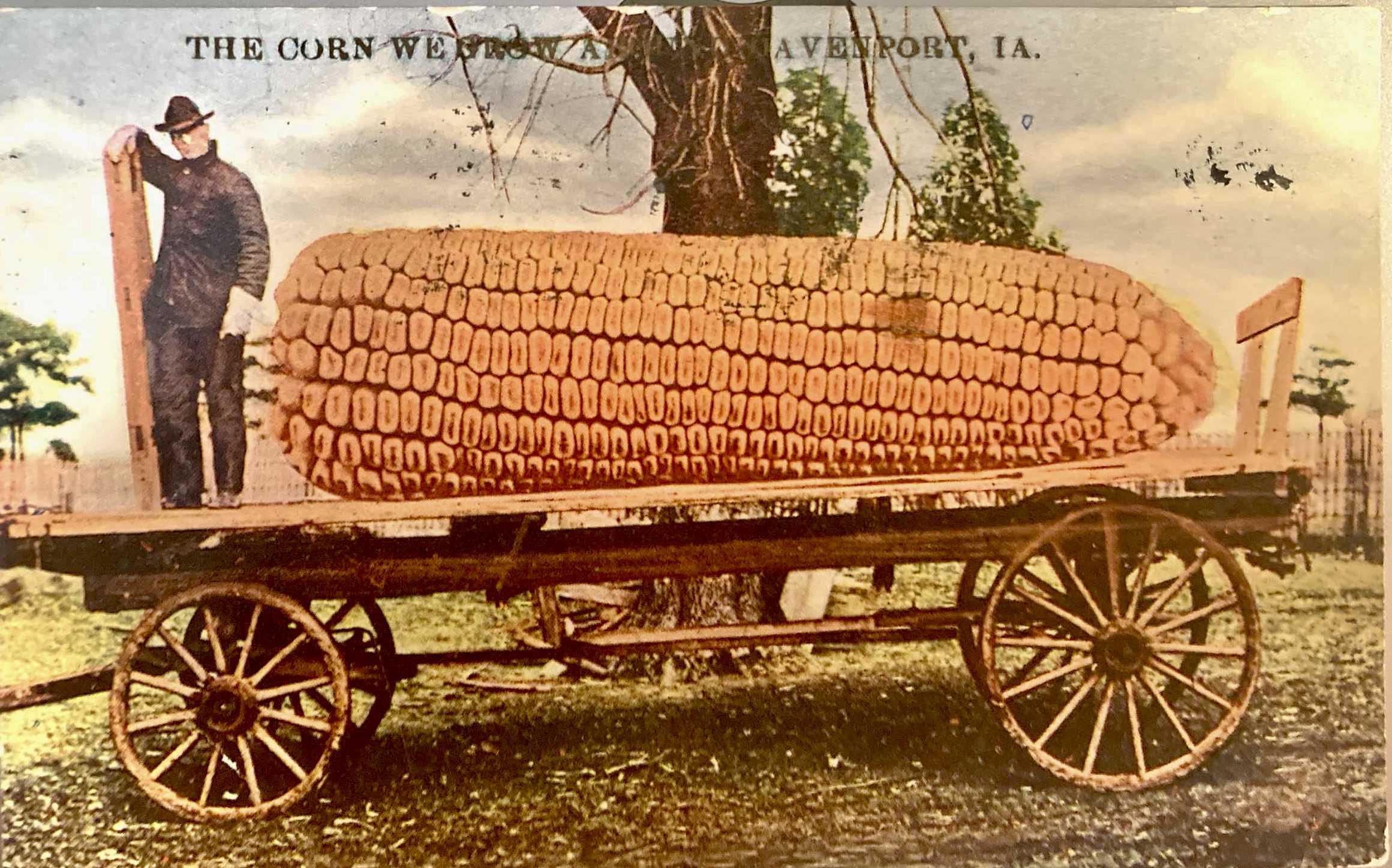
That small introduction to vintage postcards aside, this deltiologist now shares with you the focus of his past and occasional collecting: the rural exaggeration card. Also known as the tall tale card or simply the whopper. These cards were trendy in the first half of the 20th Century. Several observations may point us in the direction of explaining the phenomenon.

  1. Large, champion agricultural products have always drawn people’s interest, so state or county fair visit1ors are attracted to giant prize-winning pumpkins, apples, and watermelons. Of course, large farm animals will also draw crowds.
  2. The need for the agricultural sector to draw competing attention to itself as urban growth exploded         and skyscrapers began to command more attention and became the iconic symbol of a powerful,          advanced nation.

 3. Newer methods of producing postcards coupled with advances in darkroom technology meant a widespread availability of an increasing number and variety of cards.

 4. A trend took root, and local boosterism and increased tourism fed a craze for whopper cards. Rail and automobile travel allowed penetration of rural areas and the desire to use postcards to advertise mobility.

5. American exceptionalism is apparent in many forms of expression, but all were based on the conviction that there was something special and superior about the United States. Pride in democracy, the size of the nation, or a particular feature such as Niagara Falls were the mainstays of this exceptionalism. Now, a gigantic potato might serve the same purpose.

 6. Related to this was the need to embellish the myth of the promised land, an Edenic continent, to contrast itself to exhausted Europe. This notion can be traced to earlier arrogant views of some European philosophers that Americans and their efforts were always puny. Buffon and de Pauw argued against the exceptionalism of nature in America, but most of their arguments were directed against the fauna, not the flora. 

As a minor deltiologist, I would be thrilled to state unequivocably that Americans during the first three decades of the 20th Century promoted tall-tale postcards to rebuff some arrogant Europeans in the 18th Century, but that’s just not so. Those insulting views had long been put to rest. [Interesting sidebar here: Jefferson sent Buffon a giant specimen of a moose, which, we are told, helped nudge that philosopher towards recanting his earlier theory.]

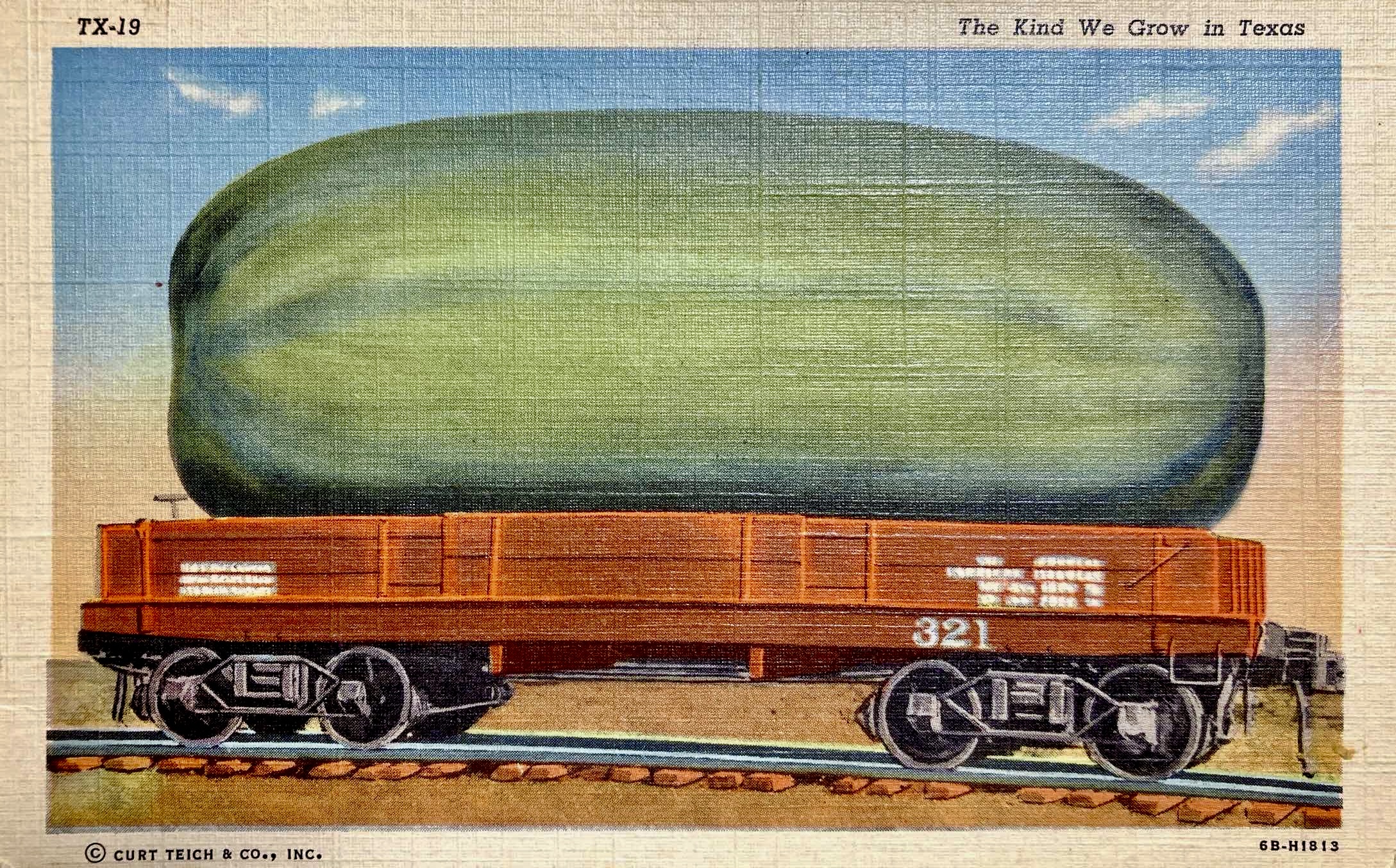
Of course, I should have been suspicious that none of the writers on the subject of postcards, some quite scholarly, connected Buffon and, say, a giant melon on a railcar. Nevertheless, who among us would be able to resist presenting such a bombshell paper at a distinguished academic conference? 

Enough, let’s look at some postcards.
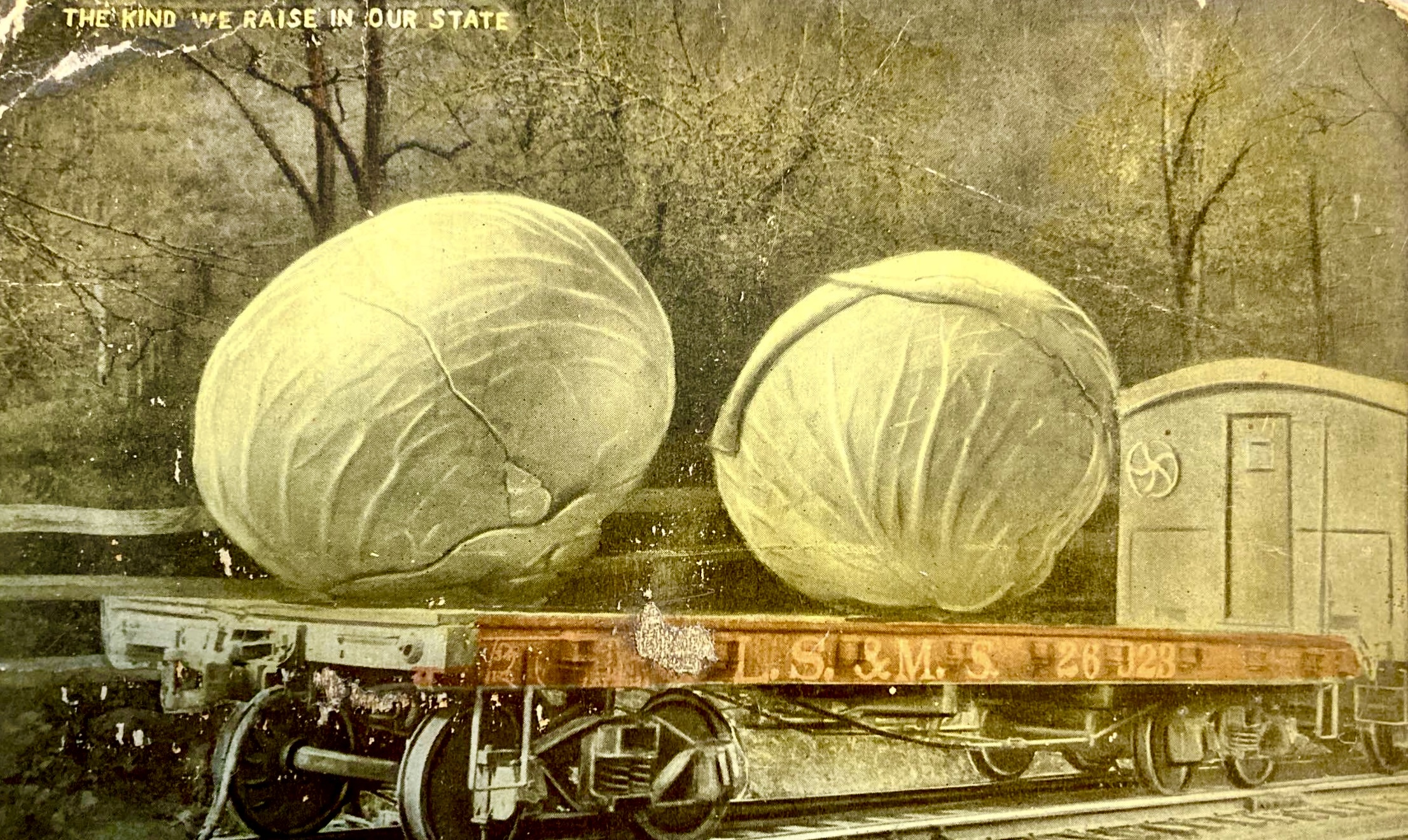
The particualar state was not identified pointing out how generic these cards became. Often the same flatcar was used to carry the giganitic fruit or vegetable.

Series II #2 Encountering Hippos

Series II # 2

[EDITOR’S NOTE] Followers of P.N. Zoytlow, who watch this site with great care, were thrilled to see his recent submission, “Rubbery Cuds of Manhattan.” He must intend to be more low-key, for he slipped it by this editor and posted it. I was offended and hastened to ask him for in interview along the lines of the last interview we did together, the one in Limon, Colorado. However, PNZ refused and said that his work would have to speak for him. The format of the past, the 75-minute rapid research, is abandoned and that whatever he offers in the future would not have a specific format. “Expect anything. Expect nothing,”said he. That is classic Zoytlow, of course. He elaborated: “could be reports, could be fiction, could be photos, could be poetry.” Whatever happens, it will stand or stumble on its own.” That said, he submitted to this editor, a new submission.

                                                                  ###

Many years ago, I sold part of my soul to a hippopotamus. When I realized it, I was astonished, but gradually it just became a part who I am. Today it no longer seems so remarkable. Furthermore, it is a fading issue. That is how things are, of course, the fading impact of phenomena. Remember a graduation ceremony? A kiss? The hotel stay in Amsterdam? Are you sure they happened? So, did I really entangle with hippos? Or was it just a conflation of my many zoo memories?

When I was four, my Uncle took me to the zoo in Milwauand we (my parents, my sisters and I, the youngest) were visiting. I was keen on all animals then (as now) and since we did not have a zoo in the smaller city where we lived, a visit to the zoo would be a rare treat. The Uncle was a slender man in a gabardine coat and a matching fedora. This was in October after the War and all men wore hats all the time. How did men in America move from fedoras to ball caps? The zoo was somewhere in a more extensive city park. We walked from the bus stop past a lagoon with summer boating and entered the zoo. It was free. Milwaukee was happily still under the spell of its Socialist mayors. Uncle sped me by the monkey island, then the pens with the various deer-like creatures, and those icons of Africa, the zebras. “We’ll start in that building over there,” he said, indicating an ivy-covered dark brick edifice.

Inside, the air was moist and thick with unfamiliar odors. It was fetid! Walking more slowly now, we passed some apes ranging from baboons to an ancient chimpanzee gone grey, but no gorillas. Some of the cages were empty because the weather was still pleasant (it was October and the doors open to the outdoor pens. A lone rhinoceros slept in the doorway, its head in the sun and hindquarters in the indoor gloom. And then we were there: the hippos. My Uncle loved hippos, and it was his conviction that every visit to a zoo should start at the hippo exhibit and then work backward to the entrance. At the time of our visit, there was a pair of hippos at the zoo, replacing a solitary male named Yakob who had filled the space for nearly 30 years. The replacements, Tony and Cleo, had drawn crowds of school children for months after their arrival but, once evident that the pair did very little that could be entertaining, the visitors dropped off. On the day we were there, it was minutes past feeding time and they ate alfalfa and loaves of day-old bread donated by grocers. Watching them roll that bread around their mouths was a joy for the Uncle. Watching hippos eat is probably the most exciting thing they do. They do not swim: they walk on the bottom of rivers, these river horses.

                                                                 ≠ ≠ ≠

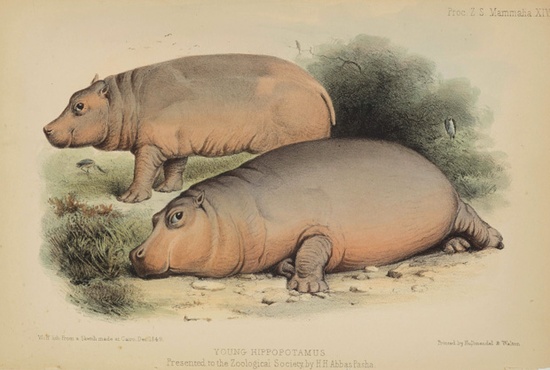
Now move back in time some fifty years. I am looking at a rack of postcards and there it was:

 Juan, Comte de Montizón was the photographer, an early amateur working at the dawn of photography. The photo was taken in 1852, about two years after the hippopotamus, Obaysch, arrived in the Regents Park Zoo London. Prince Albert purchased the photo as he and Queen Victoria were Obayasch enthusiasts. The hippo was said to be the first such animal in Europe in historic times. The photograph has remained popular (and sells well as a postcard). That photo drew me in. I needed to learn more, and so I began to accumulate details about the life of Obayasch, a male Nile hippopotamus named after an island near his place of captivity. He was injured by his captors; the scar is visible on his left side in the photo. When he arrived in London, he was a sensation, and zoo attendance increased significantly. Newspapers gave updates on his daily routine. Citizens bragged about how many times they had seen him or what he had done. However, basically, like most zoo hippos (and those in the wild) he slept, he ate, and he moved in and out of the pool provided for him. He was (like hippos generally) known to be aggressive and a danger to humans. But what a source of pride for the British public! What other nation had a hippo of their own?

Sketching out the life of Obayasch yields the following milestones:

Captivity in 1849 in the White Nile near Obayasch Island.

Arrival at the Regents Park Zoo in May 1850.

Obayasch provided with a mate, Adhela, in 1854.

Adhela had three pregnancies, but only one survived, a female named Miss Guy Fawkes (named because of her birth near Guy Fawkes Day) in November 1872.

Obayasch died in 1878 at approximately 30 years of age, Adhela 1882 and their daughter miss Guy Fawkes in 1908.

An excellent recent book on Obayasch, his family and their various levels of meaning in Victorian Britain is Simons, John (2019). Obaysch: a hippopotamus in Victorian London. Sydney: Sydney University Press.

Obayasch is a potent example of a craze that famous animals in zoos and circuses have triggered. Frequently cited is “The Hippopotamus Polka.” The newspapers were for years filled with the doings of London’s hippos. Artists and photographers provided images.

One can explain the draw of hippos in Victorian England easily enough by

recalling that hippos were rare in European zoos and that England had the first. It was part of the evidence of imperial capabilities–the nation could arrange the capture and successful transport of such a dangerous creature from deep in Africa! Here was a nation to be reckoned with. This must be the British Century. The high interest in hippopotamuses is all the more remarkable since they are among the more lethargic zoo animals, perhaps right behind crocodiles. Elephants, apes, bears, and seals provided more “action.” and zoo visitors want a show.

Visiting the typical hippo display did not hint at the vicious personalities of hippos in their natural setting. Nor that they were, despite their bulk, swift sprinters on land where they foraged on grasses along rivers. They were capable of elaborate wide-mouthed threats to rivals, and they are the most responsible for human deaths of all African wildlife. The image of a docile bulk lazing in a stream was disproven often. Moreover, even that national treasure, Obaysch, could occasionally demonstrate his underlying aggression, though zoo officials played this down. After all, Obaysch was a sort of beloved pet, and it was best not to provide the public with whatever contrary impressions they wished to impose on the beast. The large cats were nasty, the apes were humorous, but the hippos were mainly huge. That they came to compete at all with the more menacing rhinos and elephants is remarkable, 

So, what is it with hippos? What was it that drew my Uncle to them? What arrested my attention when I found the postcard with the 1852 photo?

Though hippos are known for their dumpy appearance, 18% of their impressive 1.5-ton weight is skin. Beneath this 5cm (2″) thick hide hippos have a relatively thin layer of fat. Hippos will regularly open their mouths to the fullest extent possible, revealing their tusk-like teeth, which are formidable weapons in the bellowing mating jousts in their native waters. Their feet seem undersized, and unlike the elephant, the rhino, and a variety of muscular buffalo, they have stumpy legs. Hard to believe that they can–and have–outrun humans over short distances.

Visitors to zoos hope to see hippos, swimming, eating, yawning, or just walking, but most of this time, a sedentary beast is all they see. That leaves their imposing bulk to be the most compelling feature. They appear to be the zoo’s obesity champions, though they are no as fat as marine mammals.

There is one other hippopotamus feature that is memorable and often shared with others who were not present. According to East African creation stories, hippos were first placed on the plains and forests and not in the rivers. The Creator God was fearful that they would eat all the fish, and the crocodiles were already doing so. So the hippopotamuses struck a deal with the Creator: they would not eat the fish and would scatter their dung so that the Creator could easily verify that were no fish bones present. Thus male hippos expel their loose bowels and, using their short, muscular tails as propellers, effectively scatter excrement.

Let me just add I have visited many zoos in the United States and Canada. That initial visit with the Uncle did create the momentum. So when I speak of the interest of the public in the defecation of hippos, as well as a few other zoo animals, I do speak from first-person observation.

I recall the delight of children observing the dung-scatter in a California zoo. They screeched their delight. “Look, Mama, it’s pooping!” while Dad yelled, “I got it! I got it!” meaning it was there on videotape to entertain forever. And do not forget, reversing the film is great fun.

There are less than 100 hippos in the United States and Canada, but not every zoo has one or two. When a zoo acquires a new hippopotamus, public interest is high. The birth of a new hippo is equally compelling. The importation of animals from Africa is no longer done with the former ease of arranging it with a compliant colonial government. Mostly, hippos with their lethargic patterns do not command great interest or affection.

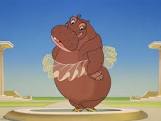
To understand why the hippo is in demand, you have to recall their abundant presence in popular culture. The hippos craze in England subsided, but hippo imagery continues. In 1940, a successor to Obayasch as a star appeared as Hyacinth, the ballerina in the Disney classic, Fantasia. Hyacinth did her dainty steps wearing a lacey tutu to Ponchielli’s Dance of the Hours. It was a memorable hit and had audiences guffawing. Oh, the beatific expressions! Not a hint of the maliciousness every zookeeper keeps in mind. Moreover, they were funny–as only obese creatures tend to be when they are stepping out! So successful was the Dance of the Hours that hearing it always brings to mind those scenes.

Other films or children’s television shows featured funny hippos (George and Martha, Gloria, and Peter Potamus). An array of children’s books appeared:  Hippos are Huge by Jonathan London and Matthew Trueman and Fiona the Hippo by  Richard Cowdrey are among the most popular. The latter based on the true story of a hippo born in the Cincinnati Zoo in 2017, which caused great excitement reminiscent of the arrival of Obaysch more than a century and a half earlier.


Gentle Reader: if you have stuck with this homage to zoo hippos thus far, I now spare you a lengthy listing of “stuff” with a hippopotamus inspiration. Personally, writing this has brought me closure on the topic. I have honored my Uncle, the hippo-fan. I have exorcised them. But one more thing.

Interest in and affection for the hippopotamus began with Obayasch in 1850. A century later, in 1953, a popular holiday song appeared in America. This was the plaintive  I Want a Hippopotamus for Christmas.  Here is a sample:

I want a hippopotamus for Christmas/ Only a hippopotamus will do/No crocodiles or rhinoceroses/ I only like hippopotamuses/And hippopotamuses like me too. 

                                                          FINITO

Series II #1 Rubbery Cuds

spots nyc.jpeg

“Rubbery Cuds”of Manhattan

This story begins on a night flight from Omaha to LaGuardia in New York. Does anyone like the middle seat? Zoytlow does not! However, he does operate along the lines of whatever happens effects change. Not “affects” though that may be true, too. However, this is not about probability or outcomes or causalities. That said, what if one had taken an aisle seat—or taken the next flight? Alternatively, not had a reason to go to New York City (and I have lately forgotten that reason). The man in the window seat was one of those who could sleep, and he did, leaning his bulk against the window. There would be none of those little upbeats with him. One might hear “going to New York? (Obviously) “Family there?” and likely “great place to visit, but who can afford it” and so on.

The woman to my left, on the aisle, appeared to be in her early fifties, well-dressed, unscented, and wearing the smallest pair of lemon tinted granny glasses I had ever seen. She was reading a business journal, the page opened to a column by a well-known commentator titled “Crunch Time for Chewing Gum Moguls.” Skipping the usual patter,  

this observer dove in with “what a clever title, but to what does it refer?” She gave a confident smile of incandescent whiteness while lightly exhaling a slight hint of the blended mint on her breath. Yes, she was chewing gum, and in a manner so discreet that her jaw hardly moved.

Her name was Malvis…something. She was a lawyer for a consortium of confectioners. Under discussion in the big city was a proposal to tax chewing gum manufacturers for damages. “What damages?”  “The spots,” she answered and rolled her eyes.

    * * * *

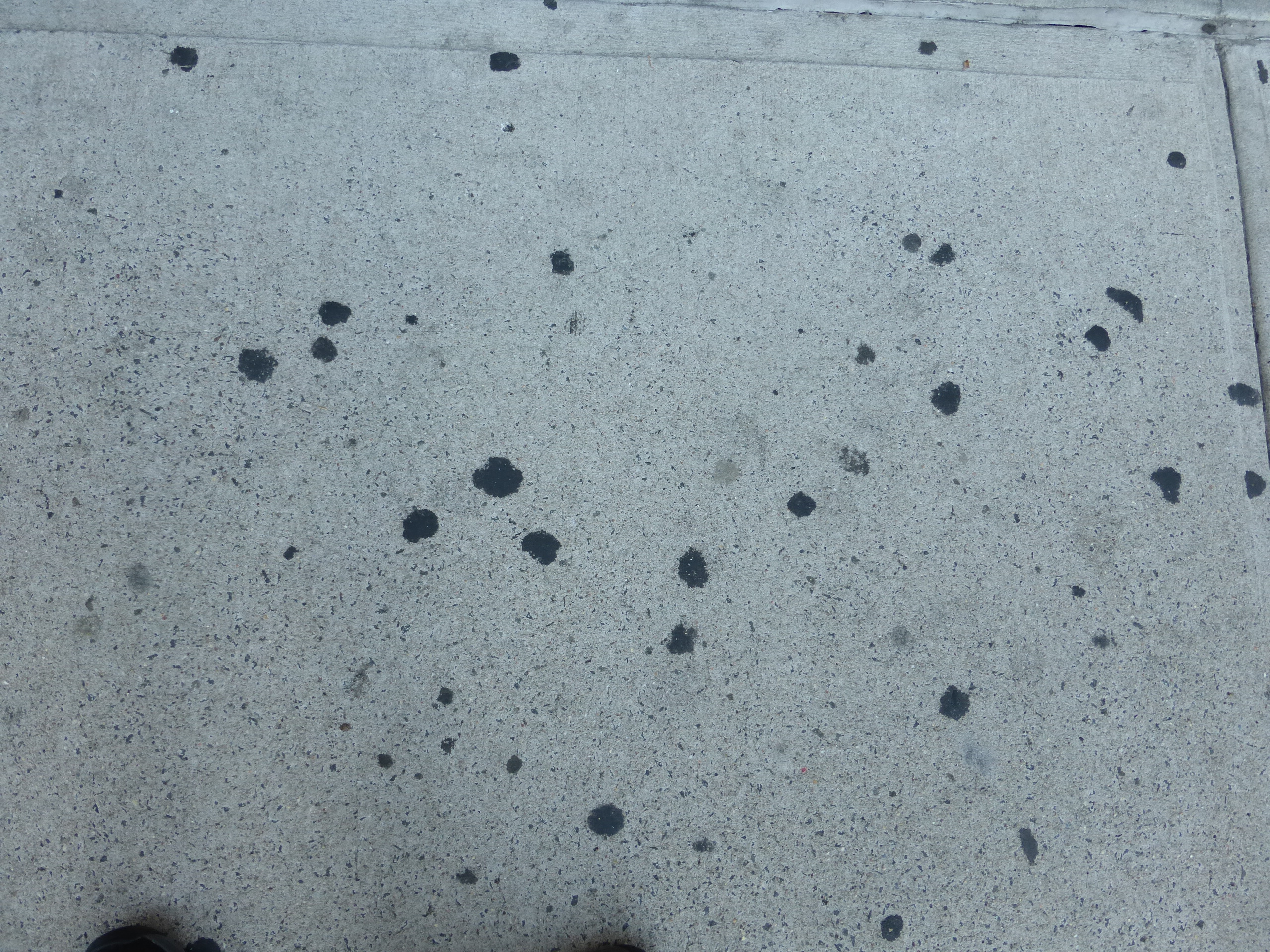
Zoytlow believes that every story has a backstory and that every backstory has a backstory and so on until we reach ultimate causality. In New York City and urban areas in other cities and countries, spat-out chewing gum achieves an afterlife on sidewalks as flat black spots. Imagine tar spots. These dark moles on the city’s epidermis are nearly everywhere, but they mass together near the entrances to subways, bus stops, or at the entrances to bars, stores, and apartments. Once situated, they remain for years. The grime of the city and the unintended pressure applied by pedestrians assures them unexpected longevity.

 Zoytlow thinks that the gum issue evolved from its very beginnings on Staten Island in the 19th Century. Staten Island? What about the origins of chewing gum with Native American groups, especially those in southern Mexico and Central America where chicle occurs as a latex-like substance from the sapodilla tree. 

In 1865 the ex-President of Mexico, General Antonio Lopez de Santa Anna, lived on Staten Island, where he hoped to raise an army for a return to Mexico, something he had managed to do, from time to time, throughout a long military and political career. Santa Anna chewed chicle, something noted by his American secretary, Thomas Adams. The General imported more than a ton of chicle in hopes of interesting buggy manufacturers into adapting the substance to their wheels. This failed, but Adams founded the chewing gum industry, producing Chiclets. Later he joined with William Wrigley, and chewing gum became widely available. Chewing gum became astonishingly popular, but not technically addictive. Gene Autry, singing radio cowboy for many years, was sponsored by Wrigley. He told listeners that while he was doing tedious work like “riding fence,” a stick of Doublemint sure did help pass the time.

Zoytlow had no problem finding spotted sidewalks in New York City. Had he not sat in the middle seat on the Omaha-La Guardia flight, he would have mistaken the spots for roofing tar, concluding that the high-rise roofers who built the city were unabating splatterers. How could that be? Hours spent in the New York Public Library yielded an Italian study of public spitting, but nothing specific. Perhaps gum spots were part of a continuum of expectoration that included, among other things, tobacco, catarrh, and pumpkin seeds. While many chewers do dispose of their gum in a waste container, some even using the original wrapper, the lazy or socially irresponsible ones do not. Encouraged by the evidence of spat gum before them, they eject their wad. Some do swallow their gum, but though harmless, most prefer not to as its unclear role in inviting a dreaded bezoar.

This information pleased Zoytlow, but it was not an answer to the question: why do chewers spit it out on sidewalks? “East Side, West Side, all about the town! The boys and girls together, spitting out their gum!” Alternatively, so Zoytlow was moved to sing to himself quietly in the great reading room of the library. Also, when he came across a rich field of black spots. 

He did learn that in 1939 Mayor Fiorello La Guardia began a campaign to end the disfigurement of the sidewalks of his city. The New York Times wrote, on December 4, 1939, that the “rubbery cuds” were a problem in need of addressing. The public was invited to enter a contest to compose a slogan to remind the public of its civic duty. Winning entry: “Don’t Gum up the Works.” by a Brooklyn high school teacher. 

 Removing gum spots is slow, arduous work. Perhaps futile. Eighty years after Fiorello’s effort, the spots are still with us.


All Field Reports

Enter your email address to receive notifications of new posts by email.

Join 6 other subscribers
Follow P.N.ZOYTLOW on WordPress.com

Stats

  • 4,276 views